

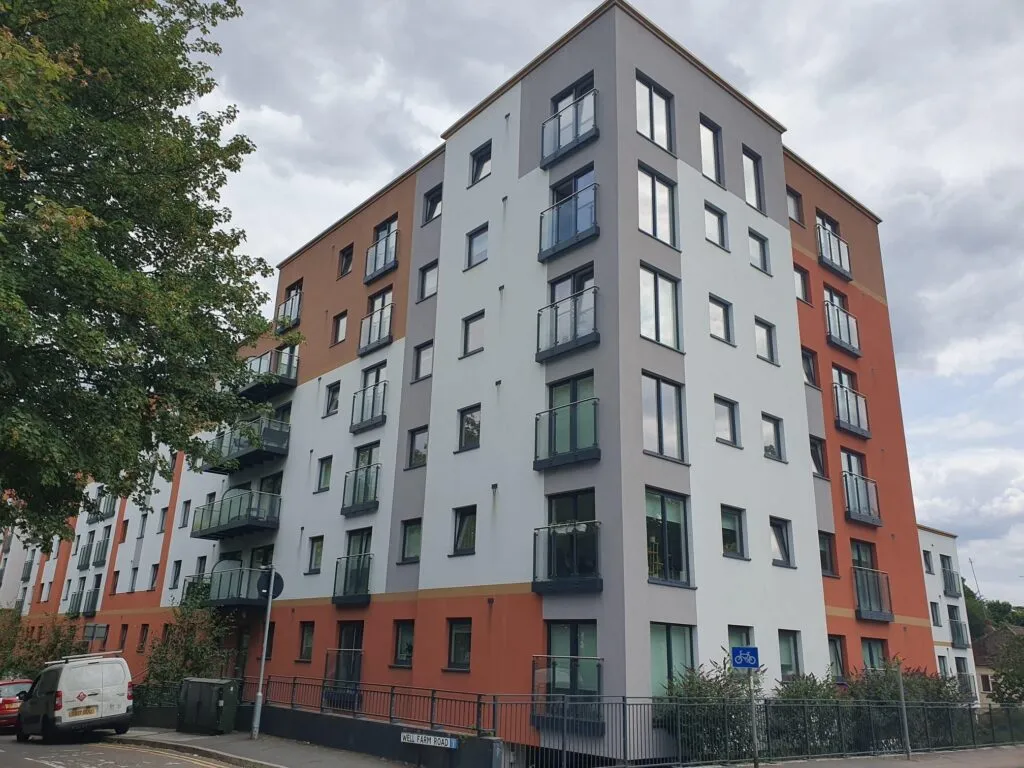
A public inquiry into Comer Group’s 167-home scheme in Whyteleafe, Surrey, is under way after the council accused the developer of breaching planning control and threatened to demolish the building, Property Week can reveal.
Whyteleafe House, 439-445 Godstone Road, Surrey
Tandridge District Council issued Comer with an enforcement notice on 4 February 2026 saying it appeared there had been a breach of planning control at Whyteleafe House, 439-445 Godstone Road, which was completed in 2022. The council said the scheme had effectively been built without planning permission, and argued it adversely affected the character and appearance of the area.
The enforcement notice states that the building should be demolished 18 months from the date the notice takes effect (6 March), unless an appeal is made against it beforehand. Vilmex, part of Comer, subsequently appealed the enforcement notice, prompting the public inquiry.
The inquiry has seen both parties discuss draft planning conditions that would need to be completed to prevent demolition, should the appeal be allowed. Possible remedies that could be considered by the inspector if the appeal is allowed include installing additional balconies, carrying out new landscaping works and implementing a revised parking layout.
In 2024, Comer saw another of its schemes, Mast Quay phase two in Greenwich, south-east London, hit with a planning enforcement notice ordering the developer to tear the two tower blocks down. The high-profile case saw the development granted retrospective planning permission by the council as it avoided demolition following an appeal, but Comer was ordered to pay £7.82m to Greenwich council and to make design changes.
Barrister Mark O’Brien O’Reilly of FTB Chambers, who represented Greenwich council in the Mast Quay case, is also representing Tandridge council. In its opening statement for the inquiry, made on 14 July, Tandridge council said the construction of the building without permission was a “significant and serious” breach of planning control.
Planning permission for the development was first granted by the council in August 2011, with a further permission granted in November 2021.
However, the council said it was now common ground between the parties that the “unauthorised development does not represent the lawful implementation of either of those planning permissions”.
The council called it an “extraordinary situation” in which the appellant had fully accepted that the development was built without planning permission.
In the appellant’s opening submission, it argued the enforcement notice was issued four years after the development completed in February 2022, so the notice, was, “to put it colloquially, out of time”.
It also said the council’s argument that there was deliberate concealment by the developer was “wholly unmeritorious”.
The inquiry began on 14 July and is set to end on 30 July.
Please visit:
Our Sponsor