

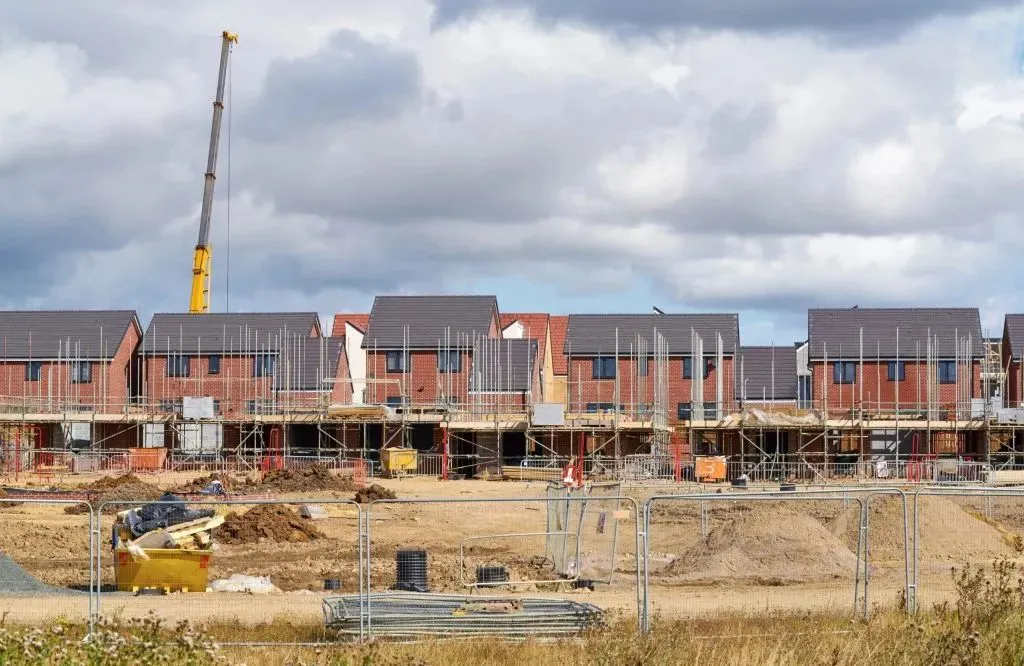
The number of UK FTSE-listed housebuilders that have issued profits warnings in H1 2026 has matched the peak seen during the 2008 financial crash, according to data from EY-Parthenon.
In its latest What Lies Beneath report, Ernst & Young’s strategy consulting arm revealed that eight housebuilders issued profit warnings in the first half of 2026, matching the peak of the global financial crisis.
EY-Parthenon said the financial challenges had been building for some time, adding that UK housebuilders have issued 47 profit warnings since the start of 2020, nearly double the 27 recorded during the previous 13 years.
The report claimed the rise is in response to cyclical and structure pressures across the housebuilding industry, including weak buyer confidence, affordability pressures and wider regulatory issues.
Jo Robinson, head of UK & Ireland turnaround and restructuring strategy at EY-Parthenon, said: “This is the most relentless profit warning cycle recorded in the 25-year history of this survey.
“The number of profit warnings is stabilising, but the proportion of listed companies issuing warnings has hit levels more typically associated with recession in six of the past seven years. While no single shock has matched the severity of the global financial crisis or pandemic, the cumulative impact of successive disruptions could be just as powerful.”
Recent profit warnings include one from Crest Nicholson in April, which lowered its profit, sales and revenue expectations in the face of increased macro-uncertainty amid the war in the Middle East.
David Crosthwaite, chief economist at the Building Cost information Service, said the data marked “another bell tolling for the government’s 1.5 million homes target”.
He added: “Under the heavy weight of taxes, regulation and a growing range of cost pressures, including those stemming from the Middle East conflict, housebuilding is becoming a hamstrung business.
“If the government is serious about meeting its housing ambitions, it needs to make development more viable for both public and private housebuilders.
“Actions within its control include reviewing the cumulative burden of levies and regulatory costs placed on development. The Building Safety Levy, for example, serves an important purpose, but ministers should ask whether there is a better way to fund it.”
Please visit:
Our Sponsor