

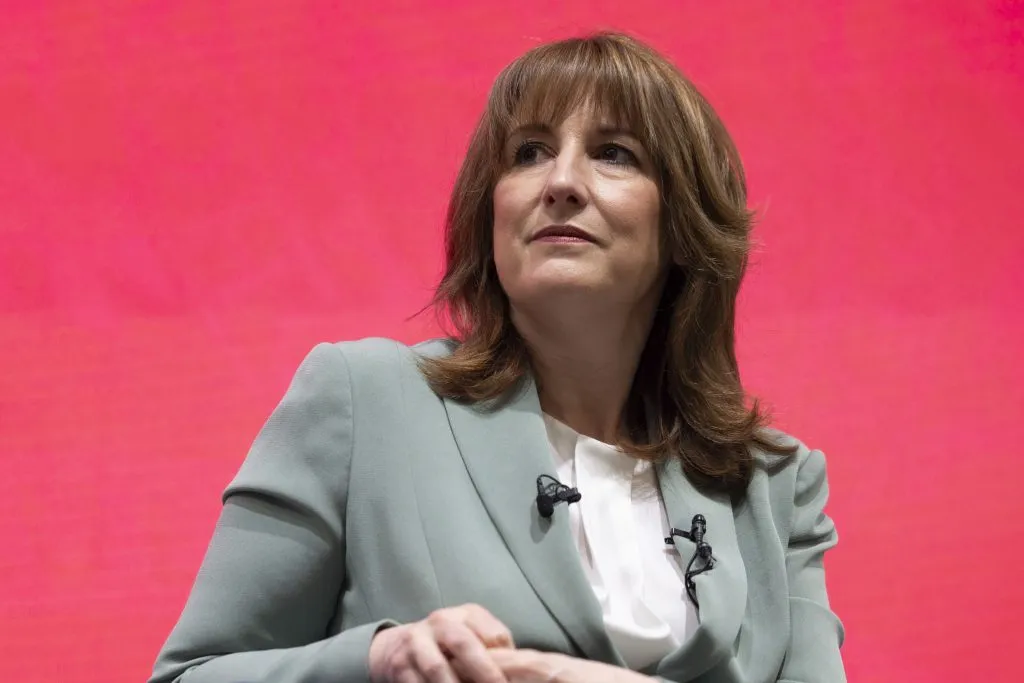
The Treasury is to give regional leaders a share of national tax revenue under new plans to rebalance England’s economy, announced yesterday (18 March) by chancellor Rachel Reeves.
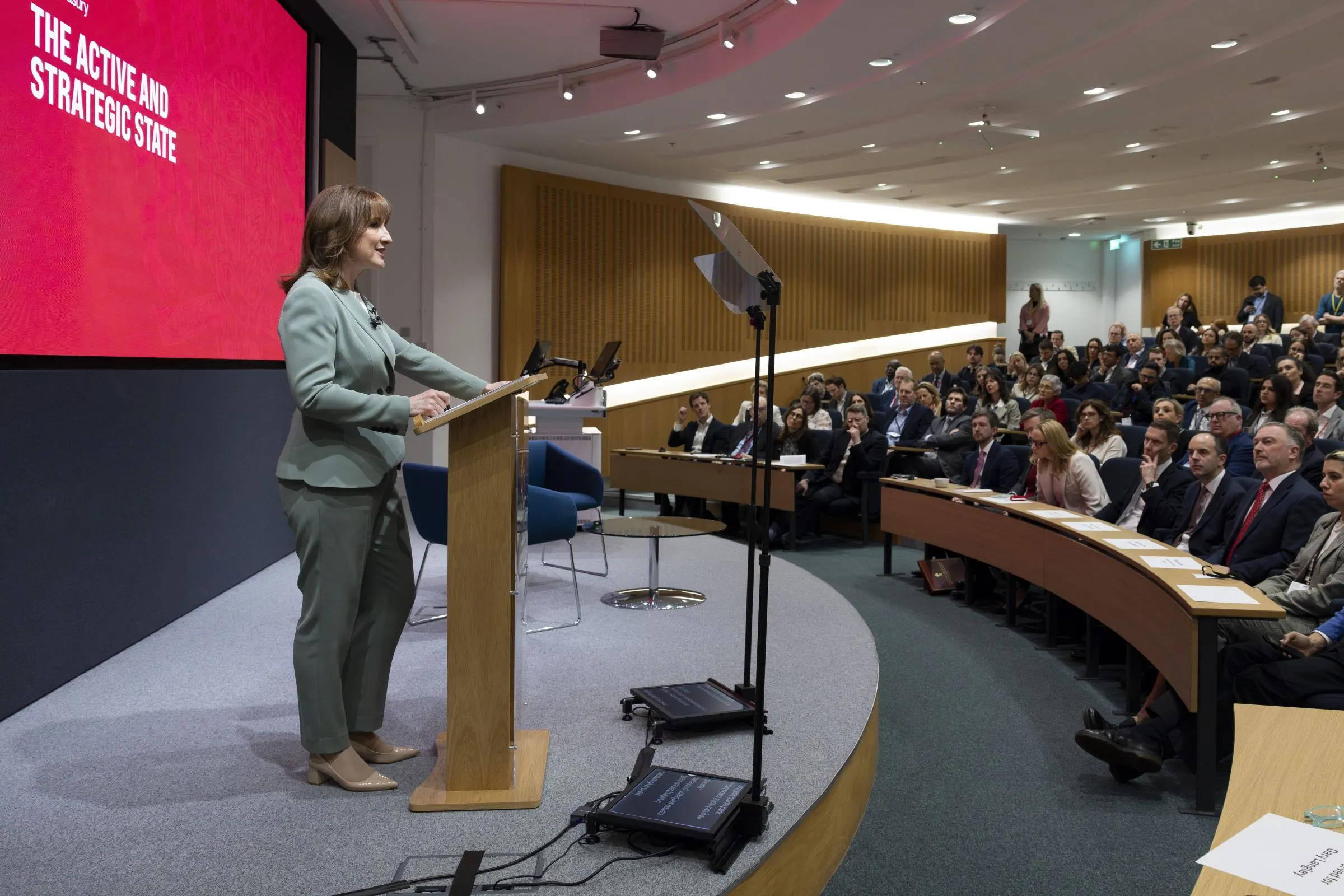
In her Mais Lecture to business leaders at the Bayes Business School, Reeves said Treasury officials are developing a devolution tax plan that would enable metro mayors to take control of a slice of tax revenue that has “for too long been allocated by central government”.
Details of the scheme will be laid out in the autumn Budget.
Reeves said: “They will look at income tax alongside other taxes, with reforms initially targeted at places that have the greatest capacity to deliver them and the greatest potential to benefit.”
She also announced £2.3bn of new city investment funds for England’s regional mayors to spend on long-term investment projects, adding that they would be able to retain future business rates revenue.
Reeves said the approach would be “a permanent transfer of power and resources, not another exercise in local ambition frustrated by central government control”.
The chancellor also used the lecture to set out the government’s latest plans to grow the economy, following the recent Spring Forecast, outlining moves towards closer ties with the EU, as well as plans to invest £2.5bn to support new technologies including artificial intelligence (AI) and quantum computing.
Reeves said the government was supporting these fields in a bid to help grow the UK’s tech sector and stop British technology firms and scientists “drifting abroad”.
She promised to achieve “the fastest AI adoption in the G7” thanks in part to government investment in British tech, adding that quantum computing is set to create 100,000 UK jobs.
Reeves acknowledged that she was speaking at an “anxious moment”, amid growing concern over the impact of the Iran conflict on the global economy, which she conceded was likely to put upwards pressure on inflation in the coming months.
But she added that the UK was in a stronger position than in the run-up to the Ukraine war and the government would press on with its growth plans.
Melanie Leech, chief executive of British Property Federation, said: “The chancellor’s recognition that growth must be rooted in the strengths of different regions, alongside plans for deeper fiscal devolution, is a significant and welcome shift.
“Giving mayors greater fiscal control opens up new options for public/private partnerships, gives private capital more certainty, and means public funding can be more aligned to the economic realities of each place. This, combined with a renewed commitment to build a closer partnership with Europe, sends an important signal about the UK’s openness to collaboration, investment and long-term growth.”
However, she warned that this ambition must be matched by action to tackle growing viability constraints that hold back investment and development. “The chancellor is rightly keen to highlight the potential of AI to drive economic growth,” Leech added, calling the UK proptech sector “world-leading”.
Mary-Anne Bowring, managing director of Ringley Group, said: “Today’s announcement, backed by hard investment, on boosting regional economic growth, especially in the Northern Corridor and across the Oxford-Cambridge arc, is very welcome.
“Yet to fully meet the economic potential of these areas and deliver the maximum return on that investment, it needs to be matched by a comparable housing offer that not only responds to consumer choice, but also the needs of business and industry in recruiting and retaining the workforce they need to succeed.”
Please visit:
Our Sponsor