
Residential experts have argued that greater use of modern methods of construction (MMC) could boost the delivery of affordable housing, making it faster and more efficient, across the UK and internationally.
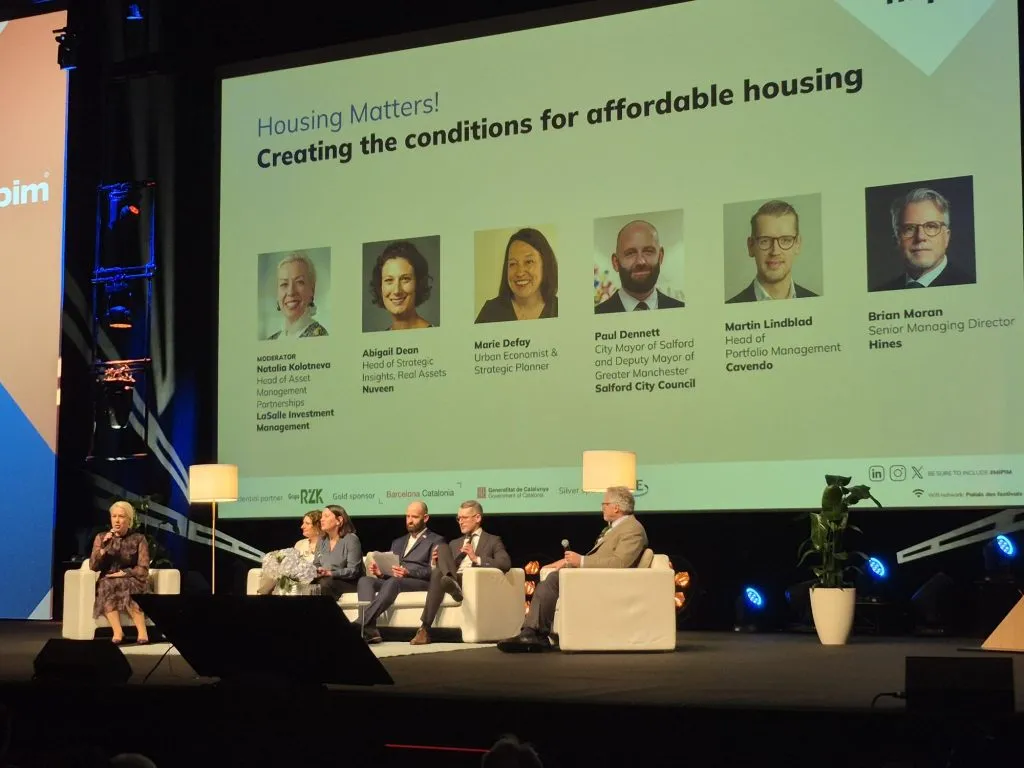
Speaking at the Housing Matters! conference at Mipim in Cannes, Hines senior managing director Brian Moran said MMC could be a “breakthrough” method for delivering housing more quickly and cheaply, while also supporting climate change initiatives, particularly through the use of timber-frame construction.
“Realistically, we should be strategically moving towards building those timber frames,” he said.
“Long term, the sequestration of carbon is huge, but also the time-saving on site is probably three to six months versus going concrete. There’s a long way to go […] but some cities in the US are really pushing hard to do this.”
During his speech, Irish housing minister James Browne also highlighted the importance of MMC, adding that the Irish government was encouraging greater adoption of MMC “through recently published standardised design approaches”.
Abigail Dean, head of strategic insights, real assets, at Nuveen, said that speeding up delivery through methods including MMC was critical in supporting the investment case for affordable housing, adding that public-private partnership was key in helping speed up construction overall.
“There is a fundamental difficulty here in delivering affordable housing while also delivering returns for investors,” she said. “Any length of time that it takes on the planning process, on the construction process, obviously adds cost.
“Anything that can be done to shorten that time period of development and construction would really help, and the only way to overcome that is to focus on partnerships.”
As well as MMC, delegates also cited the importance of a retrofit-first approach.
During a keynote speech, Anacláudia Rossbach, executive director of the UN Human Settlements Programme, said retrofit played a vital role in addressing both the housing and climate crises.
“Buildings are aging, inefficient, misallocated or abandoned,” she said.
“Retrofitting and repurposing existing buildings is one of the most capital-efficient pathways to expanding housing supply. It saves us carbon footprint and preserves the urban fabric. It can deliver at speed.
“[Retrofit homes] consume less energy and generate more revenue. It’s critical that we all invest in zoning reforms, in mixed-use vertical development, and dedicate research to the financial viability of high-density, affordable housing.
“Sustainability is no longer simply about compliance or reputation. It is about asset resilience. It is about efficiency. It is about long-term value protection.”
Please visit:
Our Sponsor