

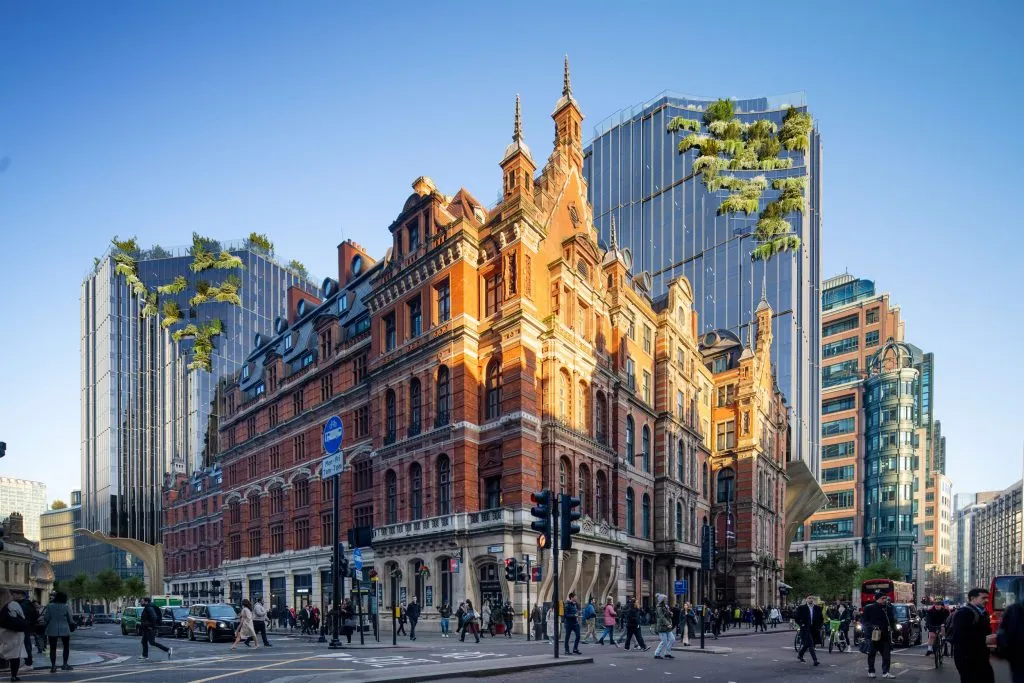
Network Rail’s £1bn transformation of Liverpool Street station has been approved by the City of London Corporation despite strong opposition.

Image of the station redevelopment. Source: Network Rail
The revised plans redevelop a 150-year station last improved in 1991, increase the overall concourse by 76%, expand the lower concourse space by 23%, improve step-free accessibility and provide eight new lifts and new entrances.
The station is the UK’s busiest, currently serving 118 million passengers a year; that figure is expected to rise 35% to 158 million. The approved plans will increase the station’s capacity to accommodate more than 200 million annual passengers, Network Rail said.
The transformational scheme is defined by an almost 100m-tall over-station office development totalling 947,000 sq ft.
When challenged at the planning meeting if the over-station office was necessary to fund the station redevelopment, Ellie Burrows, managing director for Network Rail’s eastern region, said: “Absolutely yes. We have very limited funding in terms of enhancements across the entire network. […] This is the best solution that we can identify to be able to fund the project.”
Councillor Shravan Joshi, deputy chair of the planning committee, added: “If we lived in a more gilded age, perhaps when the station was first envisaged, we would have the money from government to pay for the station alone, but we just simply do not and we have to be pragmatic and realistic.
“That over-station development in my view performs that financial viability to enable this vital infrastructure development.”
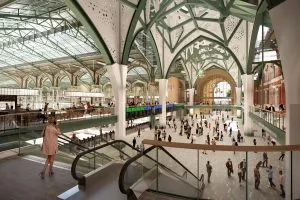
Image of the planned renovation of Liverpool Street. Source: Network Rail and The Boundary
John McAslan, founder and executive chair of architecture practice John McAslan + Partners, the firm that masterplanned the renovation of King’s Cross, labelled Network Rail’s proposals “speculative” and “ruinous”.
McAslan, who presented the committee an alternative scheme from his practice, said: “The supposition that the upgrades to the station require the very significant quantum of commercial space is flawed and carries with it significant risk.
“The result is destructive, causing irreversible harm to the listed station and context and delivers several hundred million pounds of negative value, a decade or more of destruction to commuters and other station users and an outcome that is both unviable and undeliverable.”
Hyatt, which owns the Andaz Liverpool Street hotel adjacent to the station, also lodged its opposition to the scheme. Ahead of the planning meeting, James Francque, global head of transactions at the hospitality firm, called the proposals “not financially viable” and added that they “carry a high risk of non-delivery”.
Hyatt claimed that Network Rail’s own planning documents revealed a funding shortfall of around £220m for the scheme.
The plans were also opposed by an alliance of heritage groups. Griff Rhys Jones, president of the Victorian Society and of the Liverpool Street Station Campaign (LISSCA), said: “A disfiguring billion-pound office block on top of a major heritage asset is not essential to the City’s development plans. […] It is harmful to the surrounding historic fabric.”
Speaking following the approval, Network Rail’s Burrows said: “This decision represents a key step towards the transformation of Britain’s busiest station and marks the beginning of an exciting new chapter for Liverpool Street.
“Our plans focus on improving the everyday experience for passengers while respecting the station’s unique heritage. With annual passenger numbers forecast to grow to 158 million, this approval ensures the station will be future-proofed for decades to come.”
Shard developer Sellar, MTR Corporation and Network Rail originally submitted plans for the redevelopment of the station in May 2023. The proposals received more than 2,000 objections over its impact on heritage and conservation, with Historic England leading the backlash.
Sellar was reportedly revising the plans in October 2024, but both the developer and architects left the project a month later, with Network Rail’s property arm taking over.
Please visit:
Our Sponsor